I was all hyped to make the best grilled cheese sandwich but dang it turned into a mess. My bread stuck to the pan and edges scorched. I didnt know that cheese needs time to warm so proteins set slowly before heat cranked up. It felt like a flop but deep down i was just learning that heat control matters.
As i wiped burnt bits off my cast iron pan i noticed how butter melted all over then browned till golden brown. The process of caramelization took over and made that crust extra crunchy. That was my first hint that sugar breakdown and cheese fat melting go hand in hand. Kinda wild to see science happen in a pan.
After that flop i read up on slow simmer heat control and let the pan warm on low first. Letting it sit helped protein set gently inside the melting cheese. Next trial i heard a soft sizzle then flipped at just the right time. I gotta tell you that moment changed my best grilled cheese sandwich game forever.

Crisp Science Wins
- Caramelization effect makes the sugars in bread turn golden brown creating that sweet savory crust you crave when you lift up the best grilled cheese sandwich
- Protein set process happens in melted cheese as heat slowly breaks bonds allowing it to stretch rather than scorch into rubbery bits on your teeth
- Maillard reaction role kicks in when proteins and sugars meet heat forming new flavor compounds that smell dang good and taste richer with each crispy bite
- Heat transfer insight shows how a thin coating of butter conducts energy evenly across bread surfaces avoiding hot spots that char before the cheese melts
- Steam escape trick comes from pressing gently so excess moisture leaves the sandwich instead of turning it soggy in the middle
- Cheese viscosity change reveals how fats liquefy then thicken as they cool giving you that pull away gooey stretch when you slice in
- Bread cell structure offers pockets of air that crisp up under high contact with the pan surface creating the perfect crunch balance
Who Does What in Ingredients
- Bread slices act as the golden brown canvas that soaks up butter and delivers that crisp structure needed to support gooey melt without falling apart
- Cheese block provides fat and protein that heat transforms into a creamy filling as proteins denature and fats melt for that stretchy pull
- Butter serves as the heat conductor and flavor booster spreading evenly on bread to promote uniform caramelization on the outer layer
- Mayonnaise spread offers extra moisture and tang acting like an emulsifier to help cheese stick and form a slightly crisp glossy shell
- Mustard layer gives a tangy kick that cuts through richness while its vinegar acid helps break down proteins for smoother melt
- Garlic powder works as a seasoning tiny sprinkle that browns quickly adding aromatic notes without burning into bitter bits
- Ground pepper brings mild heat and aromatic oils that survive the slow cook on low letting you taste little pops of spice
Getting Ready Stage
First you gotta gather your tools and ingredients before heat hits the pan. Lay down two slices of your favorite bread on a cutting board. Make sure each slice is dry enough so butter clings well to the surface.
Next you spread a thin even layer of butter on the outside of each slice. Keep it soft but not melting. That little shift in fat helps the bread brown to golden brown while you melt the cheese inside.
Then stack your cheese on the unbuttered side of one slice. You can layer two cheeses for flavor complexity and watch how fats melt at different rates so you get a smooth pull away.
Finally top with the other slice butter side out. Press gently and let everything sit while you warm the pan up to medium low so you get that slow simmer effect right off the start.
You flip that sandwich and see a golden brown mirror where butter met heat so nicely. Then you slice in and cheese stretches out like a ribbon wrapping around your fork. Youre hit with a toasty aroma and swoosh of melted dairy.
Taste is rich with caramel tones from the crust and creamy melt in each bite. Youll notice protein set makes the cheese smooth not gritty and each mouthful feels oh so satisfying on the first bite.
Start on medium low so butter melts slowly then spreads heat across the bread evenly. That slow simmer of heat keeps the cheese from burning on the edges while its still solid in the middle. Let it cook undisturbed for two to three minutes.
Press gently with a spatula to encourage contact. Youll hear a soft sizzle but no crackle or smoke. That indicates even browning without scorching. When the bottom looks golden brown gently shimmy it then flip.
On the second side turn heat down a notch if needed. Let it sit till you see the same golden sheen. If your cheese needs more melting time you can cover the pan with a lid for a few seconds to trap steam.
Butter temperature matters do not use fridge cold blocks they tear bread. Let it soften just enough so it spreads without shredding your slice.
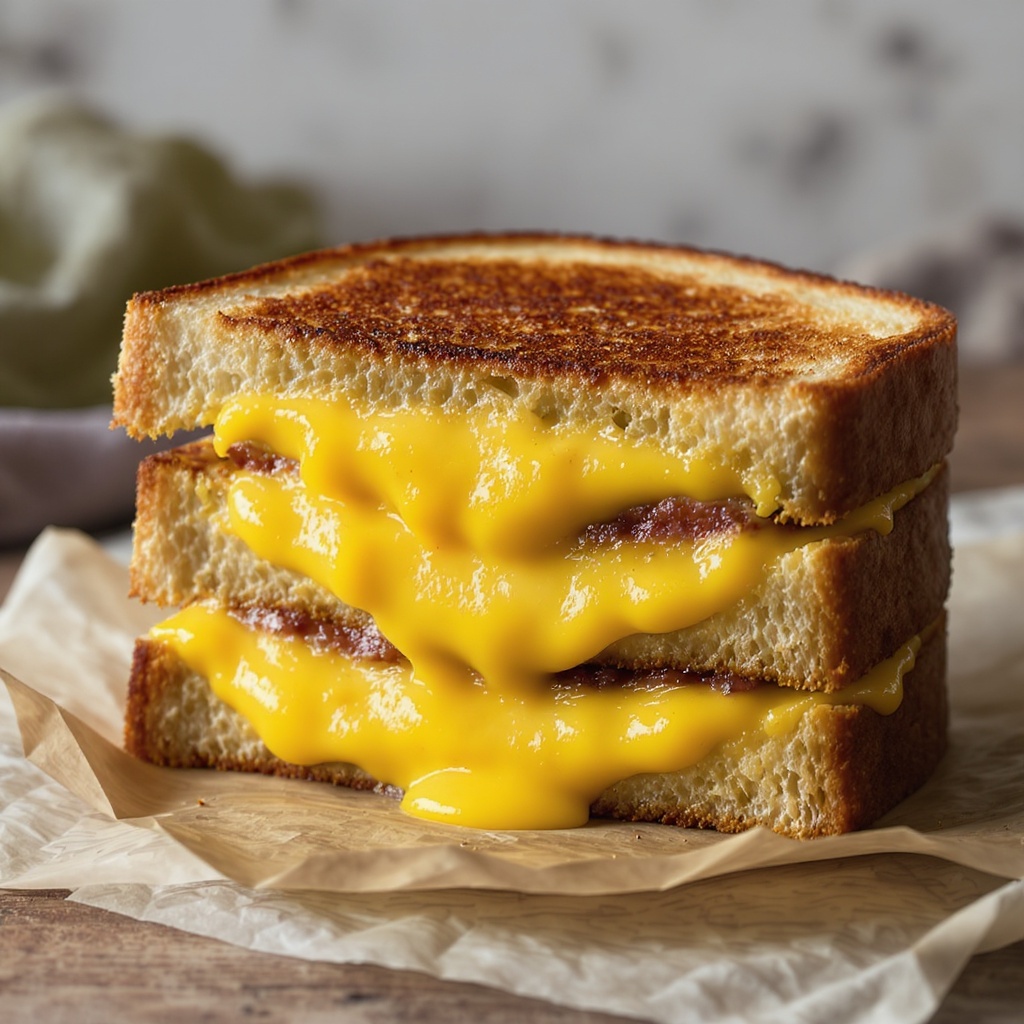
Use two cheeses with different melt points. A high melt one and a low melt one combine into that perfect pull without running everywhere.
Patience wins let each side reach golden brown before flipping. Early flipping breaks caramelization and slows crisp.
If cheese isnt melting fast enough nudge the pan off direct heat and let it rest for thirty seconds then return. It finishes melt without burn.
Plate It With Style
Trim corners at an angle for neat triangle halves. Arrange them slightly overlapped so you spot that cheesy ribbon inside.
Add a handful of spinach or baby greens for color contrast. The green pop looks fresh against golden brown crust making you want to dig in.
Drizzle a little olive oil or herb oil around the plate edges. It frames the sandwich and adds another layer of aroma when you cut into it.
Switch It Up Tweak Ideas
Swap out cheddar for gruyere and make a fancy twist. Gruyere has a nuttier flavor and melts smoother under low heat giving extra depth.
Add a thin layer of fig jam or apple butter for a sweet acid touch. That sugar hit helps caramelization and gives a fun contrast to savory cheese.
For a smoky vibe sprinkle a pinch of smoked paprika or stir in a little chipotle powder to your butter. It elevates flavor without changing technique.
Try sourdough bread or rye for unique texture and tang. Both hold up well under heat and add their own tasting notes to the best grilled cheese sandwich experience.
Stash And Save Info
You can make these sandwiches ahead then cover individually in foil. Store them in the fridge for up to two days and reheat in a pan to regain crisp.
If you freeze wrap them tightly then thaw overnight in the fridge. Rewarm on low heat in a pan for slow simmer melt so cheese stays gooey.
Leftovers can be chopped and added to soups or scrambled eggs. The crispy parts soak into broth and the cheese melts into the dish enriching every spoonful.
Wrap Up Thought
Making the best grilled cheese sandwich is all about understanding how heat interacts with butter bread and cheese. When you respect caramelization and protein set you unlock that perfect melt.
Next time you fire up the pan take a breath and remember slow simmer and even heat are your best friends. Its a simple recipe but science behind each step turns your sandwich from meh to dang good.
Kitchen Lab Questions
Why does my bread burn before cheese melts in the best grilled cheese sandwich question mark
Answer that usually means heat is too high or pan isnt preheated properly. Try medium low heat so cheese has time to soften and proteins set before crust browns.
How long does caramelization take on bread when butter meets pan question mark
It usually takes two to three minutes. The timing changes with pan material. Cast iron holds heat so it browns more evenly over about three minutes on medium low.
What does protein set mean and why does it matter question mark
Protein set refers to how cheese proteins reorganize under heat into a stretchy network. Letting that happen slowly means cheese melts smooth instead of turning stringy or rubbery.
Can i use non stick pan instead of cast iron for that crisp effect question mark
You sure can but cast iron retains heat better giving you more even caramelization. Non stick needs careful temp control so you wont scorch the crust as easily.
Will covering with a lid speed up cheese melt in the best grilled cheese sandwich question mark
Yes trapping steam under a lid warms cheese center faster but watch bread color. You may need to lift lid quickly to avoid soggy crust if too much moisture builds up.

Best Grilled Cheese Sandwich
Ingredients
Equipment
Method
- Lay out the 4 slices of bread on your cutting board.
- Evenly spread the softened butter on one side of each bread slice.
- Place 2 bread slices, buttered side down, in the cold skillet.
- Layer 2 slices of cheddar cheese (and 1 slice of mozzarella, if using) on each of the 2 bread slices in the skillet.
- Top with the remaining 2 slices of bread, buttered side up, to form 2 sandwiches.
- Turn the heat to medium-low and cook for 3-4 minutes, until the bottom is golden and the cheese starts to melt.
- Carefully flip each sandwich with a spatula and cook the other side for another 3-4 minutes, pressing down gently for even grilling.
- Remove from skillet, let cool for 1 minute, then cut in half and serve immediately.